AFFF and PFAS Contamination at Military Installations and Airports: The Scale of the Problem and What It Means for Treatment
Decades of aqueous film-forming foam use at DoD facilities and civilian airports have produced PFAS groundwater concentrations that exceed EPA health advisories by factors of 100,000 or more. A growing body of peer-reviewed research is clarifying how deep the contamination goes and why cleanup will demand treatment approaches designed for these specific conditions.

The U.S. Department of Defense used AFFF containing PFAS at military installations for fire suppression and training exercises beginning in the 1970s. The VA reports that AFFF has been used at approximately 723 military installations across the United States. The result, confirmed across thousands of monitoring wells and multiple peer-reviewed studies, is one of the most extensive groundwater contamination challenges the country has ever faced.
This article draws from federal audit data (GAO-24-107322), peer-reviewed environmental science (Yan et al., 2024; Anderson et al., 2021; Anderson et al., 2025), and VA public health reporting to outline the scope of contamination, the federal transition timeline, and the treatment considerations these sites present.
How Large Is the Contamination Footprint?
The scale is difficult to overstate. According to a 2024 Government Accountability Office report (GAO-24-107322), DoD's AFFF inventory spans roughly 1,500 facilities and more than 6,800 mobile assets (vehicles, aircraft, and vessels equipped with AFFF systems). That inventory represents decades of routine use at fire training areas, hangars, flight lines, and crash response stations.
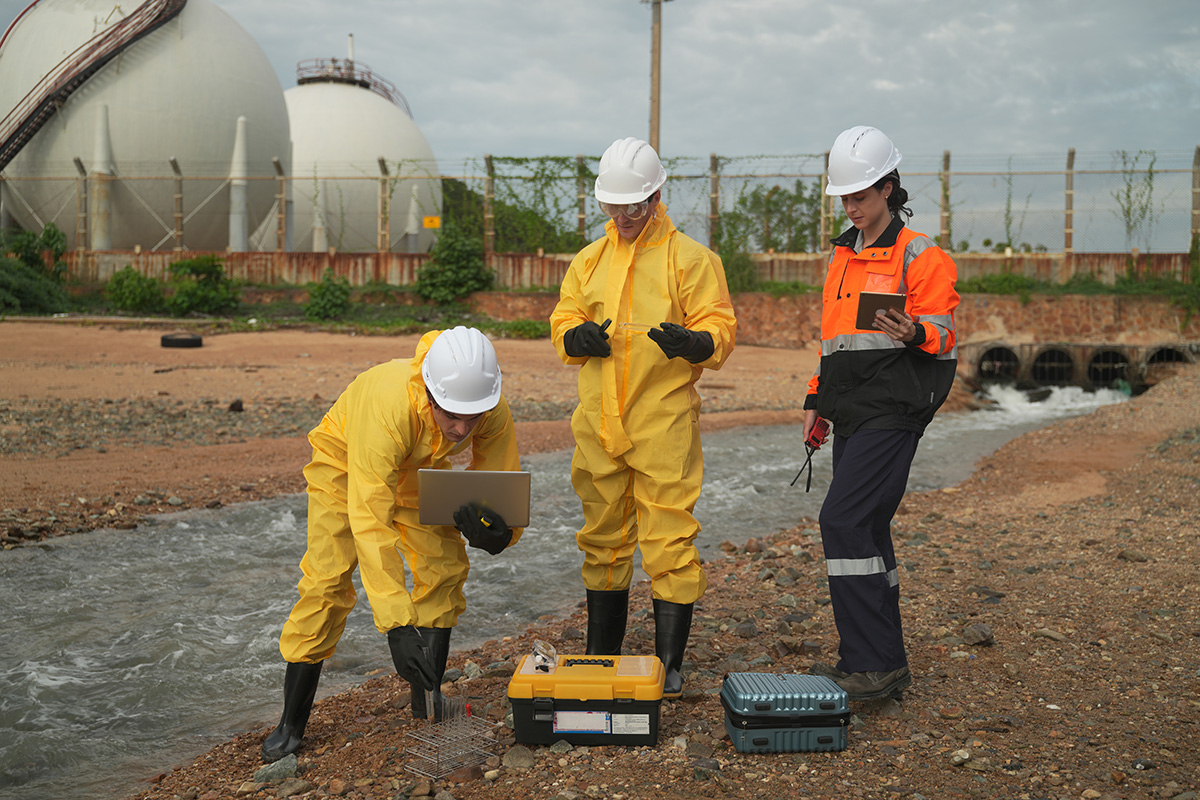
Anderson et al. (2021) described the environmental footprint more directly: DoD-funded research through the Strategic Environmental Research and Development Program (SERDP) and the Environmental Security Technology Certification Program (ESTCP) has identified thousands of PFAS-contaminated sites tied to AFFF use. AFFF discharges exclusively occurred at the ground surface, meaning contamination entered soils, infiltrated through the vadose zone, and reached underlying aquifers over the course of years and decades.
The detection data is consistent with that picture. Anderson et al. (2021) reported greater than 90% detection frequency for PFHxS and PFOS in groundwater at AFFF-impacted DoD sites. These are not trace-level detections. Yan et al. (2024), analyzing data from contaminated military sites, found mean groundwater concentrations of 568 ng/L for PFOA and 2,048 ng/L for PFOS. For context, the EPA's current health advisory levels are 0.004 ng/L for PFOA and 0.02 ng/L for PFOS. That puts the mean PFOA concentration at roughly 142,000 times the advisory level, and mean PFOS at roughly 102,000 times.
| PFAS Compound | Mean Groundwater Concentration (Yan et al., 2024) | EPA Health Advisory Level | Exceedance Factor |
|---|---|---|---|
| PFOA | 568 ng/L | 0.004 ng/L | ~142,000× |
| PFOS | 2,048 ng/L | 0.02 ng/L | ~102,000× |
| PFHxS | >90% detection frequency at AFFF-impacted DoD sites (Anderson et al., 2021) | ||
Scale Context: The VA reports AFFF use at approximately 723 military installations. DoD's AFFF inventory covers roughly 1,500 facilities and more than 6,800 mobile assets. Mean PFOS concentrations in groundwater at affected sites exceed the EPA health advisory by a factor of about 102,000 (Yan et al., 2024).
The Federal Transition Away from AFFF
Congress mandated that DoD transition away from PFAS-containing AFFF through the FY2020 National Defense Authorization Act (NDAA). According to GAO-24-107322, DoD initially aimed to complete this transition by October 2024 but has since extended its waiver period to October 2026. The GAO estimated the total transition cost at approximately $2.1 billion.
The VA public health page confirms that DoD plans to phase out AFFF by October 2025, though the GAO's more recent audit documents the waiver extension to October 2026. The transition involves replacing AFFF with fluorine-free foam alternatives across all fixed systems, mobile assets, and stockpiled inventories.
Even when the transition is complete, it addresses only new releases. The PFAS already in the ground from decades of prior use remains. As Anderson et al. (2021) emphasized, AFFF-derived PFAS show significant retention in soil, and vadose zone processes are critical to understanding how contamination migrates to groundwater over time. The legacy contamination problem will persist for years after the last gallon of AFFF is removed from inventory.
What Happens to PFAS Between AFFF and Groundwater
One of the more striking findings from the research is how the chemical composition of PFAS changes as it moves from the original foam into the subsurface environment.
AFFF formulations contain a large fraction of precursor compounds. Yan et al. (2024) reported that precursors made up 52.6% to 99.5% of the PFAS mass in commercial AFFF products. These precursors are not the terminal PFAS compounds (like PFOA and PFOS) that regulators typically measure. Instead, they transform over time through biotic and abiotic processes in soil and groundwater.
By the time AFFF-derived contamination reaches groundwater, that precursor fraction has largely converted. Yan et al. (2024) found that precursors accounted for only about 0.7% of the PFAS mass in groundwater at contaminated sites. The original precursor-heavy AFFF composition transforms into a groundwater profile dominated by terminal PFAS like PFOA, PFOS, and PFHxS.
This transformation has direct implications for site investigation and treatment design. Standard analytical methods that measure only terminal PFAS compounds will capture most of what is in the groundwater. But in soils and the vadose zone closer to the source, the precursor fraction can still be dominant, and those precursors will continue generating terminal PFAS compounds over time. Treatment strategies that address only the current groundwater plume without accounting for ongoing precursor transformation in the source zone risk underestimating the total mass requiring treatment.
PFAS Residuals in Equipment: A Hidden Reservoir
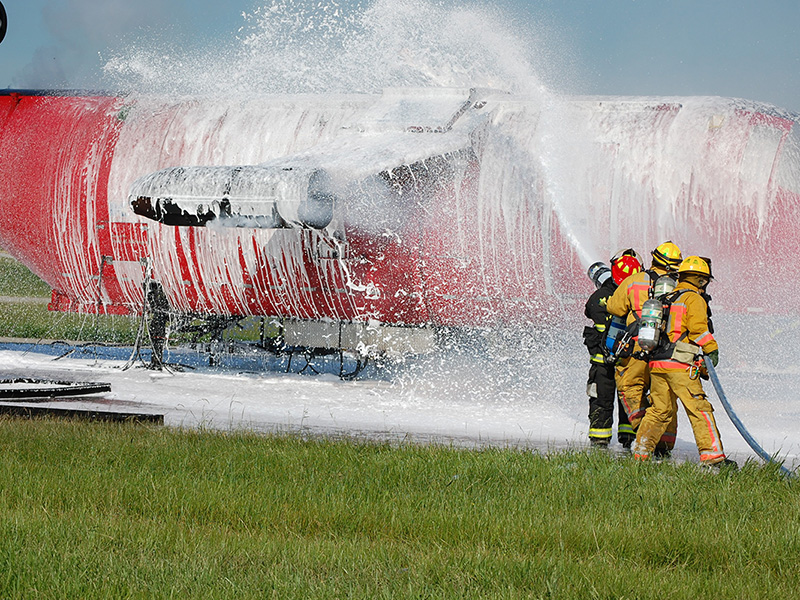
The contamination challenge extends beyond soil and groundwater. Anderson et al. (2025), in research funded by ESTCP, investigated PFAS residuals in firefighting equipment that had been used with AFFF. The study examined an Aircraft Rescue and Firefighting (ARFF) vehicle at Red River Army Depot in Texas that had previously used AFFF.
The findings were significant. Flushing the vehicle's foam proportioning system released approximately 20 grams of PFAS from the system. Even after rinsing, approximately 120 milligrams of PFAS residuals remained on internal components. Rubber and brass parts retained the highest concentrations of residual PFAS.
This matters for the transition timeline. Vehicles and fixed fire suppression systems that switch from AFFF to fluorine-free alternatives will continue releasing PFAS from internal residuals unless those systems are thoroughly decontaminated. The Anderson et al. (2025) data suggests that simple fluid replacement is not sufficient; material-specific cleaning protocols are needed, particularly for rubber and brass components that retain the most contamination.
Soil and Vadose Zone Dynamics
Understanding what happens between the ground surface and the water table is critical to predicting how long these sites will continue generating contaminated groundwater.
Anderson et al. (2021) highlighted that AFFF discharges exclusively occurred at the ground surface, where foam was applied during fire training exercises and emergency responses. From there, PFAS migrated downward through unsaturated soils (the vadose zone) before reaching groundwater. The authors emphasized that significant PFAS retention occurs in soils during this migration, and that vadose zone processes play a critical role in controlling the timing and magnitude of groundwater impacts.
In practical terms, this means that even after surface sources are eliminated, the soil column continues to act as a slow-release source of PFAS to groundwater. Anderson et al. (2021) specifically identified vadose zone transport and transformation as a priority research area within the DoD's SERDP/ESTCP programs, reflecting the recognition that accurate site models require understanding these subsurface processes.
For treatment planning, this creates a moving target. Groundwater PFAS concentrations at a given site may not decline in a straightforward way after source removal, because the vadose zone can continue releasing PFAS for extended periods. Long-term treatment system design needs to account for this sustained loading rather than assuming concentrations will drop once AFFF use stops.
Treatment Considerations for AFFF-Impacted Sites
The contamination data from these sources points to several factors that shape treatment system design at AFFF-impacted military and airport sites.
Concentration ranges are extreme. With mean PFOS concentrations of 2,048 ng/L and mean PFOA at 568 ng/L (Yan et al., 2024), treatment systems at these sites face influent concentrations orders of magnitude above what municipal drinking water systems typically encounter. Media consumption rates, change-out frequencies, and system sizing all need to reflect these elevated loading conditions. For context on how different treatment media perform under varying PFAS loads, see our comparison of GAC vs ion exchange for PFAS treatment.
The contaminant profile is complex. These sites do not present single-compound contamination. Anderson et al. (2021) documented greater than 90% detection frequency for both PFHxS and PFOS, and Yan et al. (2024) found that precursor transformation produces a groundwater mixture dominated by multiple terminal PFAS species. Treatment systems need to address this full profile, and media selection should account for how different compounds compete for adsorption capacity.
Long-term operation is unavoidable. Between vadose zone release dynamics (Anderson et al., 2021) and equipment residuals (Anderson et al., 2025), these sites will generate PFAS-contaminated groundwater well beyond the date of AFFF phase-out. Treatment systems should be designed for sustained multi-year operation with clear maintenance and media replacement pathways. Understanding PFAS impacts on the broader treatment process, as documented in our analysis of PFAS health risks and regulatory context, helps frame the timeline for these commitments.
Source zone management matters. The Yan et al. (2024) precursor data (52.6-99.5% precursors in AFFF transforming to just 0.7% in groundwater) and the Anderson et al. (2025) equipment residual data both indicate that ongoing PFAS generation from source materials will continue feeding groundwater plumes. Effective remediation strategies will likely need to pair groundwater treatment with source zone management to reduce the total mass requiring capture downstream.
The Road Ahead
The federal government is investing heavily in this problem. GAO-24-107322 documented the $2.1 billion estimated cost for the AFFF transition alone, separate from remediation costs at contaminated sites. The DoD's SERDP and ESTCP programs continue funding research into PFAS fate, transport, and treatment, as reflected in the Anderson et al. (2021), Yan et al. (2024), and Anderson et al. (2025) studies cited here.
For facilities, consultants, and water managers working on AFFF-impacted sites, the data paints a clear picture: the contamination is extensive, the concentrations are high, the chemical profiles are complex, and the source zones will continue producing contaminated groundwater for years. Treatment system design that accounts for these realities from the outset will perform better and cost less over the long run than systems sized for conditions that underestimate the challenge.
Military and airport AFFF sites represent some of the most demanding PFAS treatment applications in the country. With groundwater concentrations exceeding EPA health advisories by five orders of magnitude, complex multi-compound profiles, and sustained source zone loading, these projects require treatment systems engineered for the actual conditions documented in the peer-reviewed literature.
Sources
- U.S. Government Accountability Office. (2024). "Firefighting Foam: DOD is Working to Address Challenges to Transitioning to PFAS-Free Alternatives." GAO-24-107322. https://www.gao.gov/products/gao-24-107322
- Yan, P.-F., et al. (2024). "A review of the occurrence and microbial transformation of per- and polyfluoroalkyl substances (PFAS) in aqueous film-forming foam (AFFF)-impacted environments." Science of the Total Environment, 927, 171883. https://www.sciencedirect.com/science/article/pii/S0048969724020266
- Anderson, R.H., et al. (2021). "US Department of Defense-Funded Fate and Transport Research on Per- and Polyfluoroalkyl Substances at Aqueous Film-Forming Foam-Impacted Sites." Environmental Toxicology and Chemistry, 40(1), 37-43. https://academic.oup.com/etc/article/40/1/37/7734458
- Anderson, J., et al. (2025). "Characterization of PFAS residuals: A case study on PFAS content in a firefighting foam delivery system of an aircraft rescue and firefighting vehicle." Chemosphere, 370, 143916. https://www.sciencedirect.com/science/article/pii/S0045653524028248
- U.S. Department of Veterans Affairs. "PFAS - Perfluoroalkyl and polyfluoroalkyl substances." Public Health. https://www.publichealth.va.gov/exposures/pfas.asp
Working on an AFFF-Impacted Site?
PRM designs and builds PFAS treatment systems for the high-concentration, complex-profile conditions found at military and airport sites. With experience across various types of remediation projects and 36+ years in water treatment, we design systems matched to your site's actual contamination data.
Contact Our Team