Landfill Leachate and PFAS: How Forever Chemicals Are Reaching Groundwater Through Landfill Liners
Statewide testing in North Carolina reveals PFAS in landfill groundwater at concentrations thousands of times above the federal drinking water limit. Peer-reviewed research confirms that even modern double-lined landfills are not fully containing PFAS in leachate, and the state ranks second nationally for residents who depend on well water.
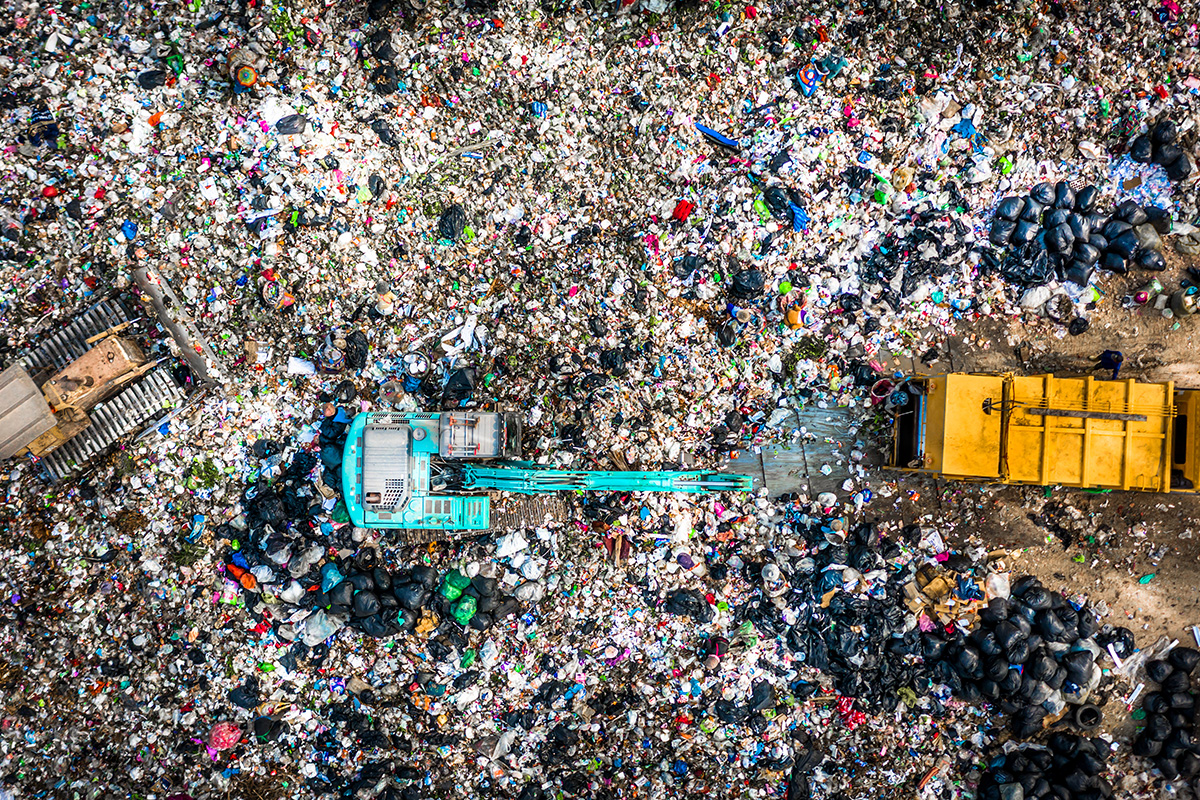
Most PFAS-containing products (nonstick cookware, stain-resistant fabrics, fast food wrappers, firefighting foam) end up in the same place at the end of their useful life: a landfill. Once buried, these products release PFAS into the liquid that percolates through the waste mass. That liquid, called leachate, is the primary pathway by which PFAS exit a landfill and enter the surrounding environment. New data from North Carolina and peer-reviewed research from Florida show that this pathway is larger than many treatment professionals realize.
What NC's Statewide Testing Found
North Carolina recently required all active and closed landfills to test their groundwater for eight PFAS compounds that have federal or state health-based standards (McLaughlin, 2025). The results, presented to the state's Environmental Management Commission by NC DEQ's Division of Waste Management, revealed contamination across the state.
"There are some high observations," said Adam Ulishney, deputy director with the Division of Waste Management, during the presentation. At some North Carolina landfills, PFOA and PFOS showed up at concentrations more than 4,000 times the EPA's 4 parts per trillion drinking water limit (McLaughlin, 2025).
Ulishney noted that "the vast majority of groundwater at the landfill facilities [exceeds] the 4 parts per trillion for PFOA and PFOS" (McLaughlin, 2025).
The county-level data puts the scale of contamination into perspective (McLaughlin, 2025):
| County | Compound | Concentration (ppt) | Times Above EPA Limit (4 ppt) |
|---|---|---|---|
| Alamance | PFOS | ~12,000 | ~3,000× |
| PFOA | ~6,800 | ~1,700× | |
| Johnston | PFOS | 164 | ~40× |
| Wake (Raleigh) | PFOS | 22 | ~5× |
Henderson and Pitt counties also reported elevated PFAS detections (McLaughlin, 2025).
Separately, community wells near Swepsonville, NC tested at over 3,500 parts per trillion total PFAS, and leachate at the New Hanover County landfill measured approximately 30,000 parts per trillion before the facility's reverse osmosis system could treat it (Atwater, 2025).
Why This Matters for Drinking Water
North Carolina ranks second in the nation for the percentage of residents who rely on well water, approximately 35% (McLaughlin, 2025). Private wells are not routinely tested or regulated, which means contaminated groundwater migrating from landfills can reach drinking water sources without detection. The health risks associated with PFAS exposure at these concentrations are well documented, making unmonitored pathways especially concerning.
In response to the testing results, DEQ sent regulatory letters to 20 landfill operators requiring updated "receptor surveys" to identify nearby drinking water sources. So far, nine landfills have determined that private well testing is needed. If contamination is confirmed, the facilities may be required to provide alternate water and begin cleanup. A second round of regulatory letters will be sent based on the initial findings (McLaughlin, 2025).
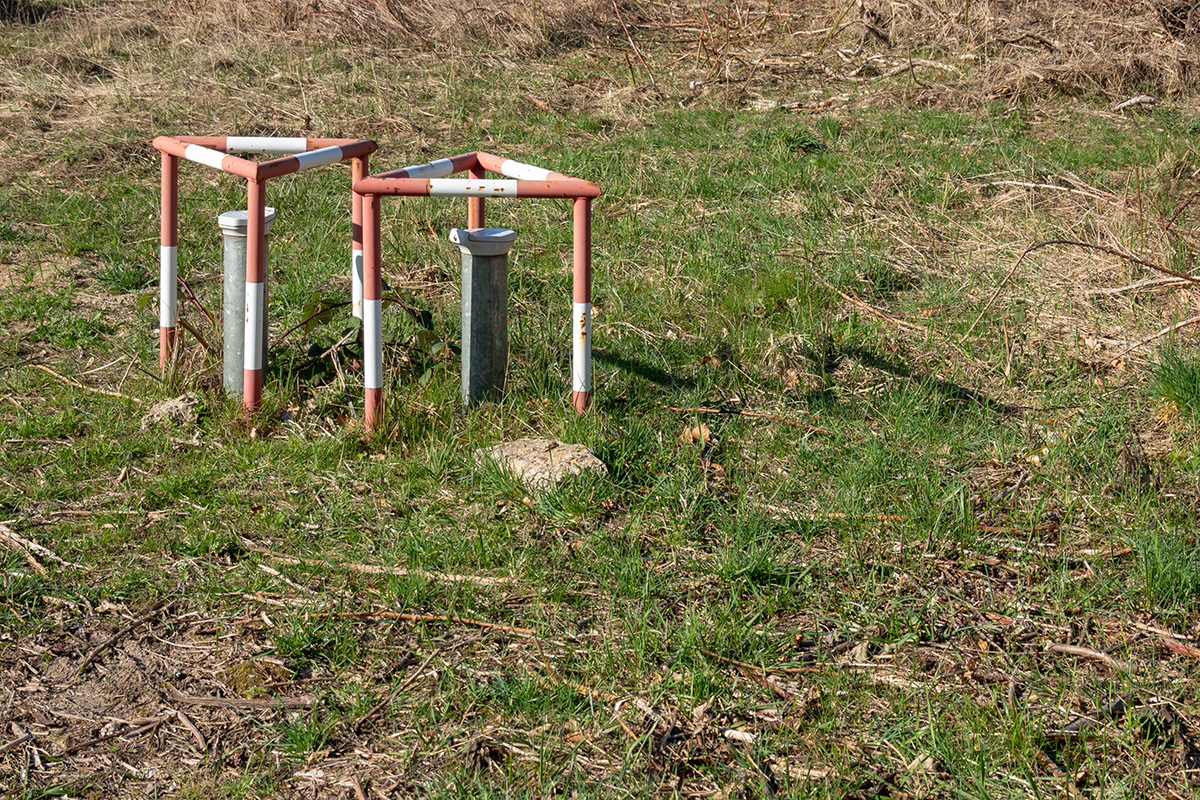
Lined Landfills Are Not Solving the Problem
Modern landfills are designed with liner systems, typically high-density polyethylene (HDPE) geomembranes underlain by compacted clay, to prevent leachate from reaching groundwater. The average performance efficiency of landfill liners in the United States is estimated at approximately 98% (Robey et al., 2025). For most conventional pollutants, that containment works. For PFAS, it does not.
A 2025 study published in the Journal of Hazardous Materials, funded by the U.S. EPA's Office of Research and Development, examined PFAS in both primary and secondary leachate from three Florida municipal solid waste landfills equipped with double HDPE geomembrane liner systems. The researchers analyzed 92 PFAS compounds across 22 samples from 11 sampling locations (Robey et al., 2025).
Total PFAS concentrations in primary leachate (collected above the first liner) ranged from 3,200 to 81,000 ng/L, with a mean of 29,000 ng/L. In secondary leachate, collected below the primary liner in what is essentially the leak detection system, total PFAS ranged from 3,300 to 96,000 ng/L. The difference was not statistically significant (p = 0.2) (Robey et al., 2025).
Key finding: Physical-chemical parameters like chloride, COD, and metals were significantly lower in secondary leachate (p < 0.01), confirming that the liner systems work for conventional pollutants. But PFAS concentrations were effectively the same on both sides of the liner (Robey et al., 2025).
The observed PFAS concentrations in secondary leachate were, on average, 26 times higher than what would be predicted based on chloride dilution ratios alone. Terminal PFAS (PFAAs) were even more disproportionate: 74% of data points exceeded expected concentrations, compared to 48% for precursor compounds (Robey et al., 2025).
PFOA concentrations in primary leachate were approximately 188 times higher than the EPA's Regional Screening Level. In secondary leachate, below the liner, they were still 176 times above the screening level (Robey et al., 2025).
How PFAS Get Through Liners
The Robey et al. study identified several mechanisms by which PFAS reach secondary leachate systems. Tears and pinholes in geomembranes allow direct leachate migration. Laboratory studies have found that a single composite liner barrier is unlikely to contain PFOA to an acceptable level (Robey et al., 2025). While intact HDPE liners have a theoretical breakthrough time of approximately 1,500 years for PFAS, field conditions with liner imperfections significantly reduce this estimate (Robey et al., 2025).
Physical leaks are not the only pathway. The study found evidence of PFAS transformation within the secondary leachate collection system itself. Precursor PFAS, which represented approximately 71% of total PFAS in primary leachate, can break down into terminal compounds during the longer retention times that secondary systems experience. This transformation process creates additional PFAS mass that was not present in the primary leachate (Robey et al., 2025).
Landfill gas was also identified as a possible source of PFAS entering the secondary system. Compounds commonly found in landfill gas, such as fluorotelomer alcohols, can partition into the secondary leachate and raise PFAS concentrations further (Robey et al., 2025).
The calculated theoretical PFAS emissions through US landfill liners is 14 kg per year. Most US landfills use a single liner rather than the double systems studied in Florida, which means the containment challenge is even greater at the majority of operating facilities (Robey et al., 2025).
The Pre-Regulatory Landfill Problem
The liner discussion applies only to modern, engineered landfills. North Carolina alone has 668 pre-regulatory landfills, sites that were built without liners and without leachate collection systems (Atwater, 2025). These older sites accepted waste for decades before environmental controls were required. Officials note that older, unlined landfills still pose risks, especially where there were past leaks or poor leachate management (McLaughlin, 2025).
At these sites, there is no barrier between PFAS-laden leachate and the surrounding groundwater. There is no collection system to capture and treat the leachate. The contamination pathway is direct and uncontrolled.
The scope extends well beyond North Carolina. A 19-state survey conducted by the Waterkeeper Alliance found PFAS in 98% of tested waterways (Atwater, 2025). While not all of that contamination originates from landfills, the survey underscores how widespread PFAS have become in surface water and groundwater systems. Separately, peer-reviewed research has documented leachate concentrations exceeding 200,000 ng/L at some facilities, with precursor transformation and short-chain PFAS persistence complicating treatment efforts (Hasnine et al., 2025).
The Cost of Treatment
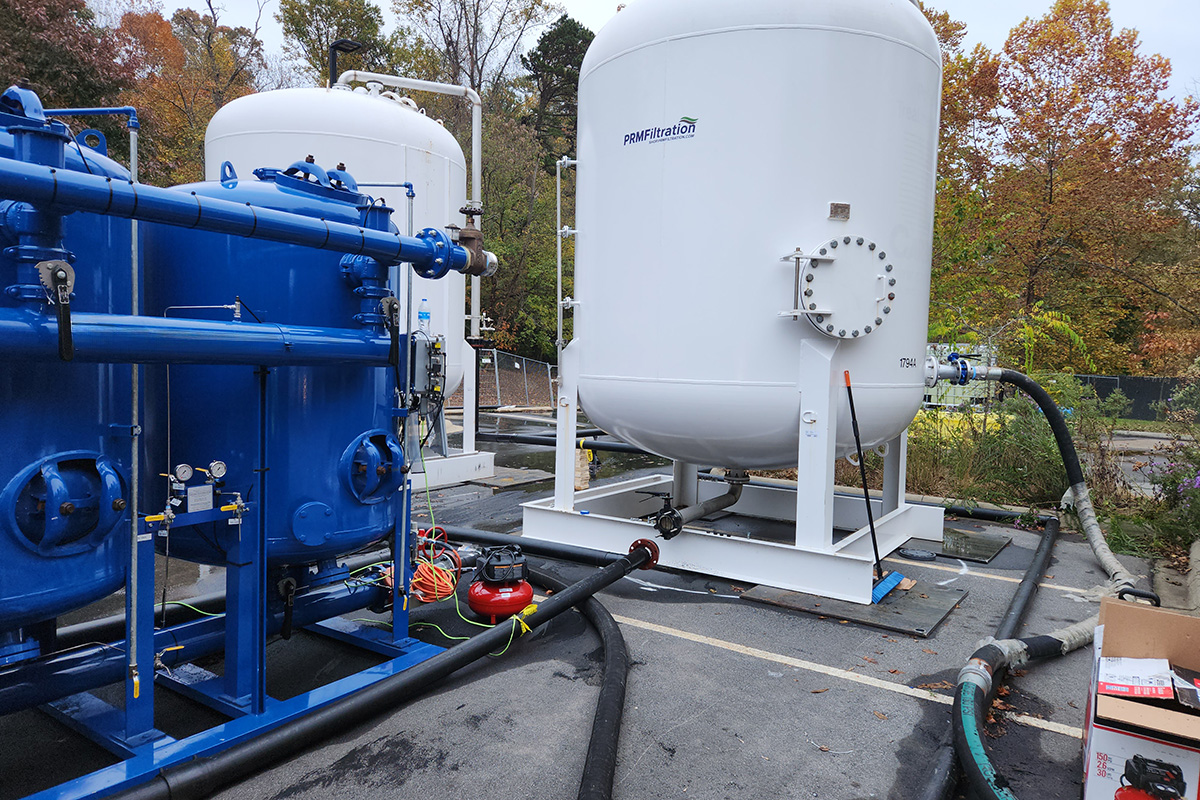
Treating PFAS in landfill leachate is expensive. At the New Hanover County landfill, the reverse osmosis system that processes 75,000 gallons of leachate per day costs $14,000 to $16,000 per month in electricity alone (Atwater, 2025). The construction of each lined landfill cell runs approximately $1 million (Atwater, 2025).
These are operational costs for a single facility with treatment infrastructure already in place. For the hundreds of pre-regulatory landfills with no collection or treatment systems, the capital costs of retrofitting would be far higher. And the cost of not treating is borne downstream: the Cape Fear Public Utility Authority, which serves the region's drinking water, has already spent tens of millions of dollars on granular activated carbon treatment to address PFAS contamination in its source water (Atwater, 2025).
North Carolina's HB 569, a polluter-pays bill that would shift some of the financial burden to responsible parties, passed the state House but stalled in the Senate (Atwater, 2025). For now, much of the cost falls on municipalities and ratepayers, a pattern playing out across the growing patchwork of state PFAS regulations.
What This Means for Landfill and Water Treatment Operations
The data from North Carolina's statewide testing and the Robey et al. research point to the same conclusion: landfill leachate is a significant and under-monitored source of PFAS to groundwater. The implications for treatment operations are direct:
Leachate treatment must target PFAS specifically. Conventional leachate management systems designed for organic matter, metals, and nutrients do not address PFAS. The Robey et al. study found that 5:3 FTCA, a fluorotelomer carboxylic acid, was the most abundant PFAS compound in 9 of 11 primary leachate samples, not the PFOA and PFOS that most monitoring programs target. Effective treatment requires addressing the full PFAS spectrum, including precursors. For guidance on how different treatment media perform across PFAS chain lengths, see our analysis of GAC vs. ion exchange for short-chain compounds.
Liner systems alone are insufficient. Even double HDPE geomembrane systems, the most protective liner configuration in common use, do not significantly reduce PFAS concentrations in secondary leachate. Treatment of collected leachate before discharge or disposal is the only reliable control point.
Groundwater monitoring near landfills needs to include PFAS. North Carolina's mandatory testing program is the first statewide effort of its kind. The results confirm that PFAS monitoring should be standard practice at all landfill facilities, particularly those near private wells or public water supply intakes.
Pre-regulatory landfills require assessment. With 668 unlined landfills in North Carolina alone, the potential for uncontrolled PFAS migration to groundwater is substantial. These sites lack the infrastructure for leachate collection, but groundwater monitoring can identify whether contamination plumes are developing.
Landfill leachate has been treated as a wastewater problem for decades. The PFAS data from North Carolina and from peer-reviewed research makes clear that it is also a drinking water problem, and one that conventional liner systems and conventional leachate management are not equipped to solve.
Sources
- Atwater, W. (2025). "NC landfills create hidden risk: PFAS-contaminated sludge and groundwater." North Carolina Health News. https://www.northcarolinahealthnews.org/2025/09/10/nc-landfills-create-hidden-risk-pfas-contaminated-sludge-and-groundwater/
- McLaughlin, L. (2025). "Toxic PFAS detected in groundwater around NC landfills." WRAL. https://www.wral.com/news/local/toxic-pfas-groundwater-nc-landfills-may-2025/
- Robey, N.M., Liu, Y., Tolaymat, T.M., Bowden, J.A., Solo-Gabriele, H., and Townsend, T.G. (2025). "Per- and polyfluoroalkyl substances (PFAS) profiles in primary and secondary landfill leachates: Indications of transformation, liner interactions, and other PFAS sources." Journal of Hazardous Materials, 494, 138705. https://pmc.ncbi.nlm.nih.gov/articles/PMC12506799/
- Hasnine, M.T., et al. (2025). "Forever chemicals (PFAS) in landfill leachate: Insights into fate, transport, and treatment strategies." Desalination and Water Treatment, 324.
Need Leachate or Landfill Water Treatment Solutions?
PRM provides treatment systems for landfill leachate, groundwater remediation, and contaminated water sources. From carbon vessels and ion exchange to complete treatment skids, we design systems matched to your PFAS profile and discharge requirements.
Contact Our Team